One clock in the load bank file
Original diagram. Not a site record.
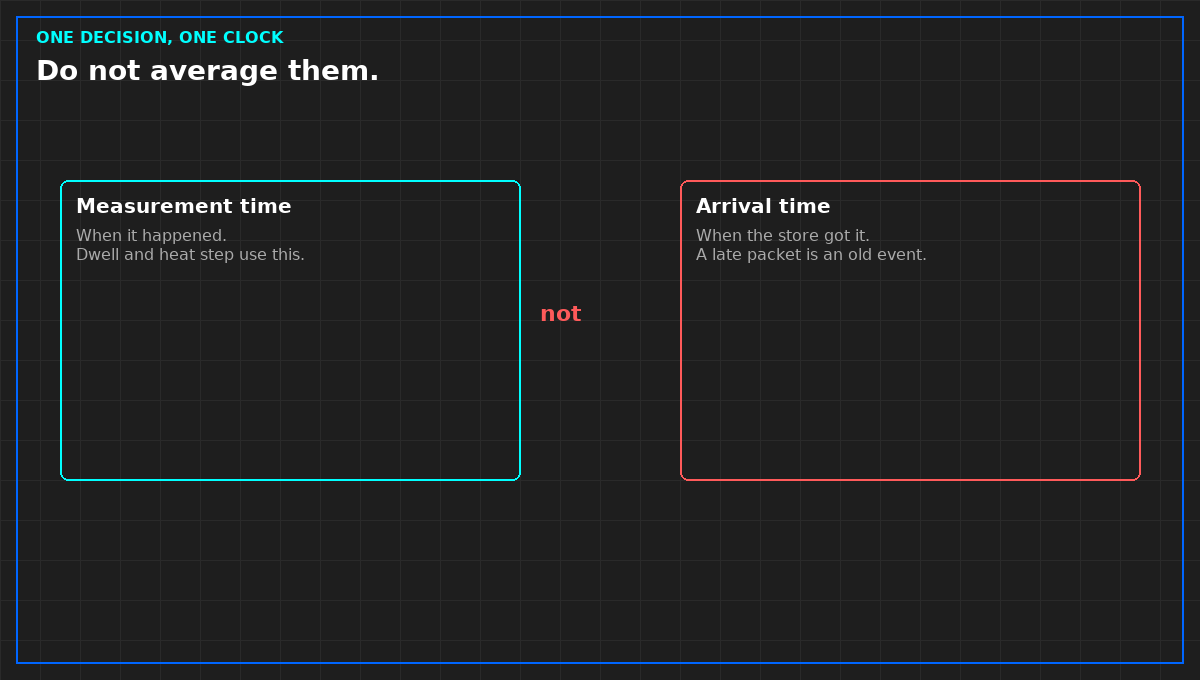
Two times travel with a sample. Measurement time is when the thing happened. Arrival time is when the store received it. A late packet with a fresh arrival stamp is an old event. Plot by arrival, and a delay becomes a change.
Pick one clock for the decision and write which. A dwell and a heat step are measurement times. A backlog in the collector is an arrival-time problem. Do not average the two to make a chart line up. The average is a third time nobody measured.
If the facility system and the load bank file disagree by minutes, write the offset or refuse the joint chart. A hidden offset invents a cause that is only a delay. That invented cause will be inherited by the report if you do not stop it in the file judgment.
The interval is part of the clock. A point expected every second that arrives every five is not the same series with a smoother average. Write the expected interval. A gap longer than that interval is a gap, even if someone filled it.
From Read and Use Load Bank Data, Tristan, Data Center Field Guides. No store link until the Kindle edition is listed.
Related: The sentence a load bank file may support.
Master the Complete Protocol: Read and Use Load Bank Data: A Field Guide to the Flash Report
1-Second Telemetry, Polling Gaps, Flow Balance Verification, and Delta-T Truth
Stop relying on contractor spreadsheets and vendor marketing claims. This field guide provides the complete, auditable verification binder—including physical equations, inspection stations, acceptance thresholds, and signed refusal templates.