A cooling-tower model does not get a pen
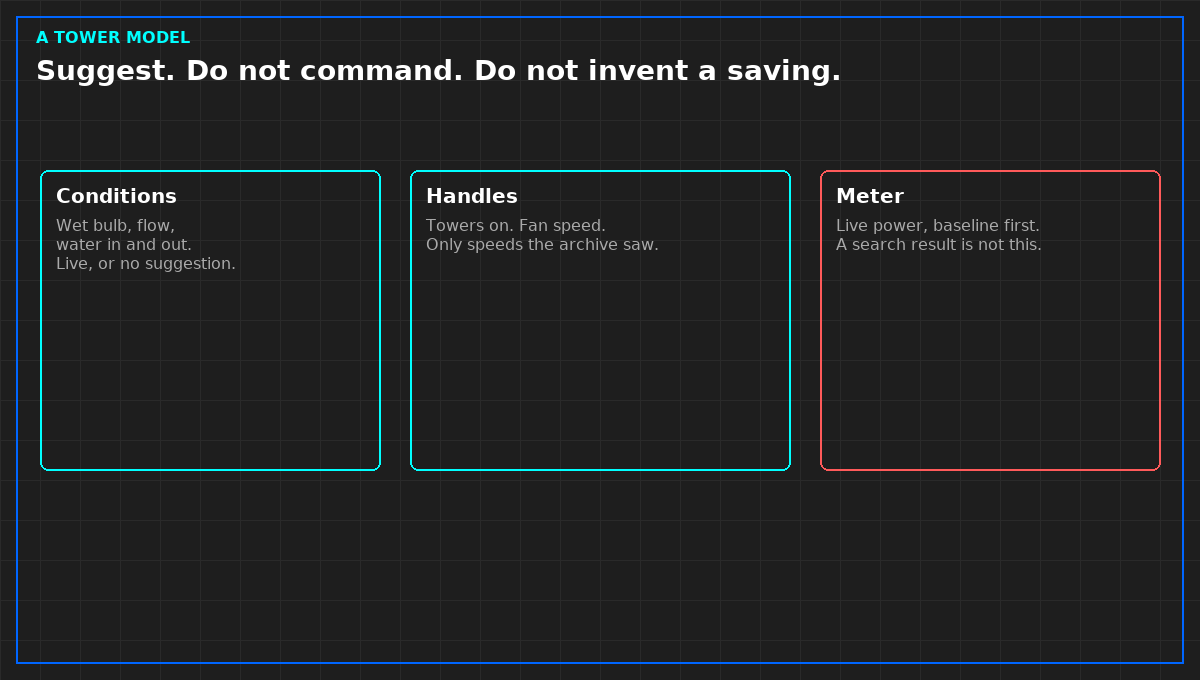
Original diagram. Not a site record. Not a control schematic.
A cooling-tower model is a calculation. It may suggest how many towers to run, and a fan speed, given the weather and the water it was shown. It may not start a fan, close an approach limit, or tell a customer the plant is more efficient. That is the same refusal a health score already has. A suggestion is not a command.
The job people want from the model is narrow. Conditions are known: water in, water out, outdoor dry bulb and wet bulb, flow. Adjustable handles are known: which towers are on, fan speed, sometimes pump speed. The model proposes a combination that should use less power. A person, or a rule that person can read, accepts the proposal. The model does not accept it for them.
Safety limits are not handles. A chiller's allowed condenser-water range, a freeze stop, and the emergency paper are not searched for a lower kilowatt. If the suggestion would cross a limit you wrote before the night, the suggestion is refused. Do not let the search widen the limit so that a number can win.
A published cooling study with a long history and many inputs is not your fit. A short extract from your own historian, on columns that barely moved, is not that study. Do not put the famous name on your slide. Do not put a percent on it either, unless a live power point, with a clock, showed the change against a baseline you wrote down first.
From When a Monitor May Speak, Tristan, Data Center Field Guides. No store link until the Kindle edition is listed.
Related: A health score does not close an incident.
Master the Complete Protocol: When a Monitor May Speak
BMS/EPMS Telemetry, Sequence of Events (SOE), Alarm Storm Suppression, and Sensor Quality Flags
Stop relying on contractor spreadsheets and vendor marketing claims. This field guide provides the complete, auditable verification binder—including physical equations, inspection stations, acceptance thresholds, and signed refusal templates.